Instagram has been quietly nudging creators toward native content for years — and heading into 2026, that nudge has turned into a shove. Watermarked reposts, recycled TikToks, and third-party-app leftovers are increasingly getting less reach than content made for the platform from scratch. If you're a solo founder or a small brand running lean, this matters a lot: you can't afford to pour effort into posts that get quietly buried.
The good news is that 'native-first' isn't some expensive production upgrade. It's a set of habits. Below are the most common mistakes that trigger reduced reach on reposted content, why each one hurts, and exactly how to fix it without doubling your workload.
Mistake 1: Reposting content with another app's watermark
The single clearest signal that a post wasn't made for Instagram is a visible watermark from another platform — a TikTok logo drifting in the corner, a CapCut end card, a stitched username. Instagram has said publicly for a while that it prefers original content and de-emphasizes visibly recycled videos, and that logic is exactly what the 2026 reshare downranking leans on.
Why it hurts: a watermark tells the ranking system this asset already lived somewhere else, so there's little reason to push it to new audiences on Instagram. Your Reel can be genuinely good and still get throttled purely on the wrapper.
The fix: export a clean version. If you're repurposing a TikTok idea, rebuild the video without the source app's watermark or overlays, and re-cut it for Instagram's frame. When you plan content in VibeDay, you can generate the asset natively for each platform instead of copy-pasting one export everywhere — so nothing carries a competitor's fingerprint.
Mistake 2: Treating 'reshare' and 'original' as the same thing
A lot of small brands assume a post is a post. But Instagram increasingly separates content you created from content you merely redistributed — reposting someone else's Reel, sharing a feed of screenshots, or pushing out a video that's clearly a duplicate already circulating on the app.
Why it hurts: the reshare downranking is designed to reward the account that made the thing, not the accounts that pass it along. If your grid is mostly redistribution, your baseline reach drifts down over time because the system reads your account as an aggregator, not a creator.
The fix: aim for a native-first ratio. Make original content your default, and treat resharing as a garnish, not the meal. Even a simple habit — one original Reel, one original carousel, one original photo per week — resets how the platform sees your account.
Mistake 3: Cross-posting the exact same file to every platform
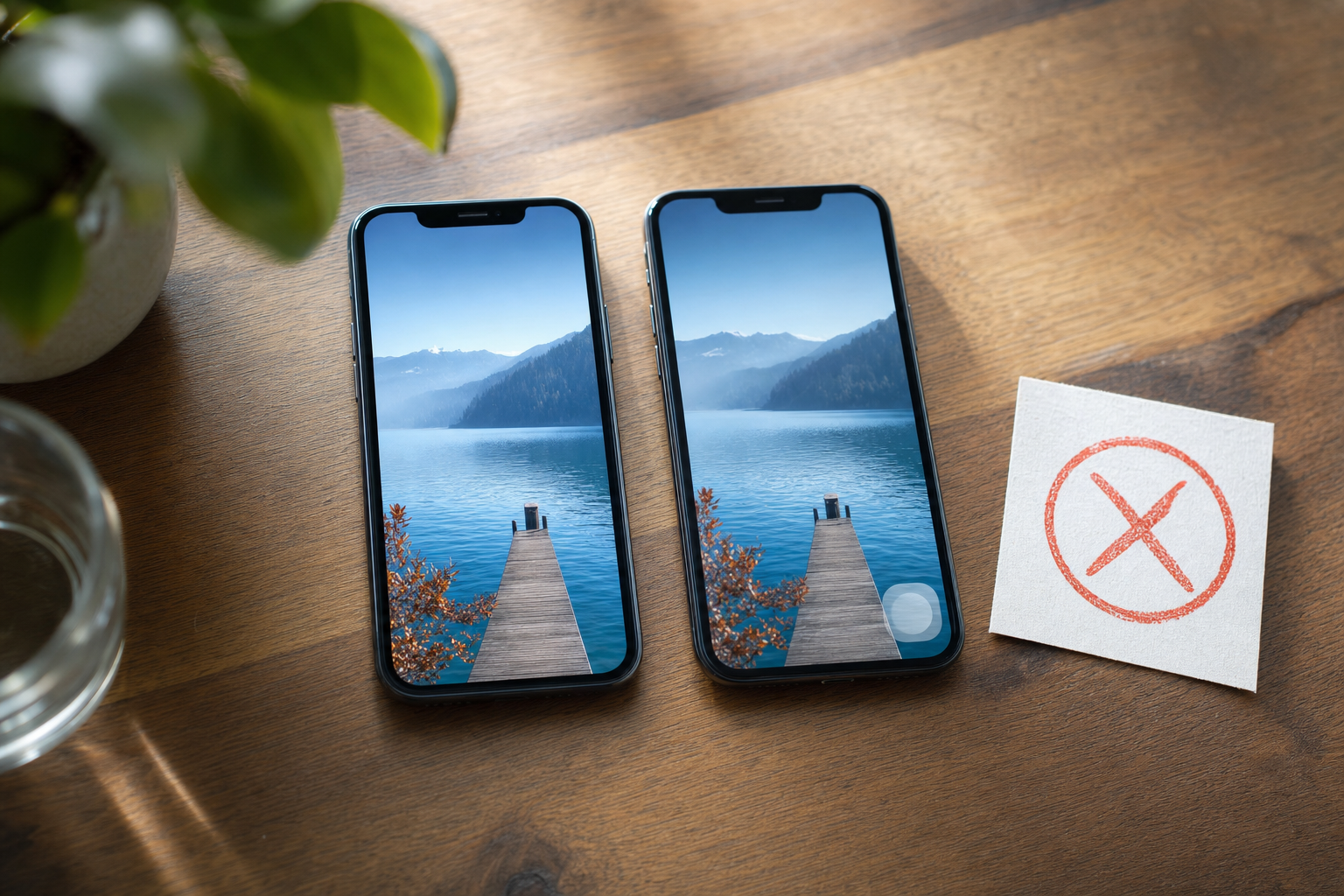
Batching is smart. Exporting one identical 9:16 video and firing it at Instagram, TikTok, YouTube, and Facebook untouched is where batching goes wrong. When Instagram detects a duplicate that's already spreading elsewhere, it has every reason to prioritize the fresher, native version.
Why it hurts: identical files, identical captions, and identical crops make it trivial to flag your Instagram post as recycled — even when you technically created it.
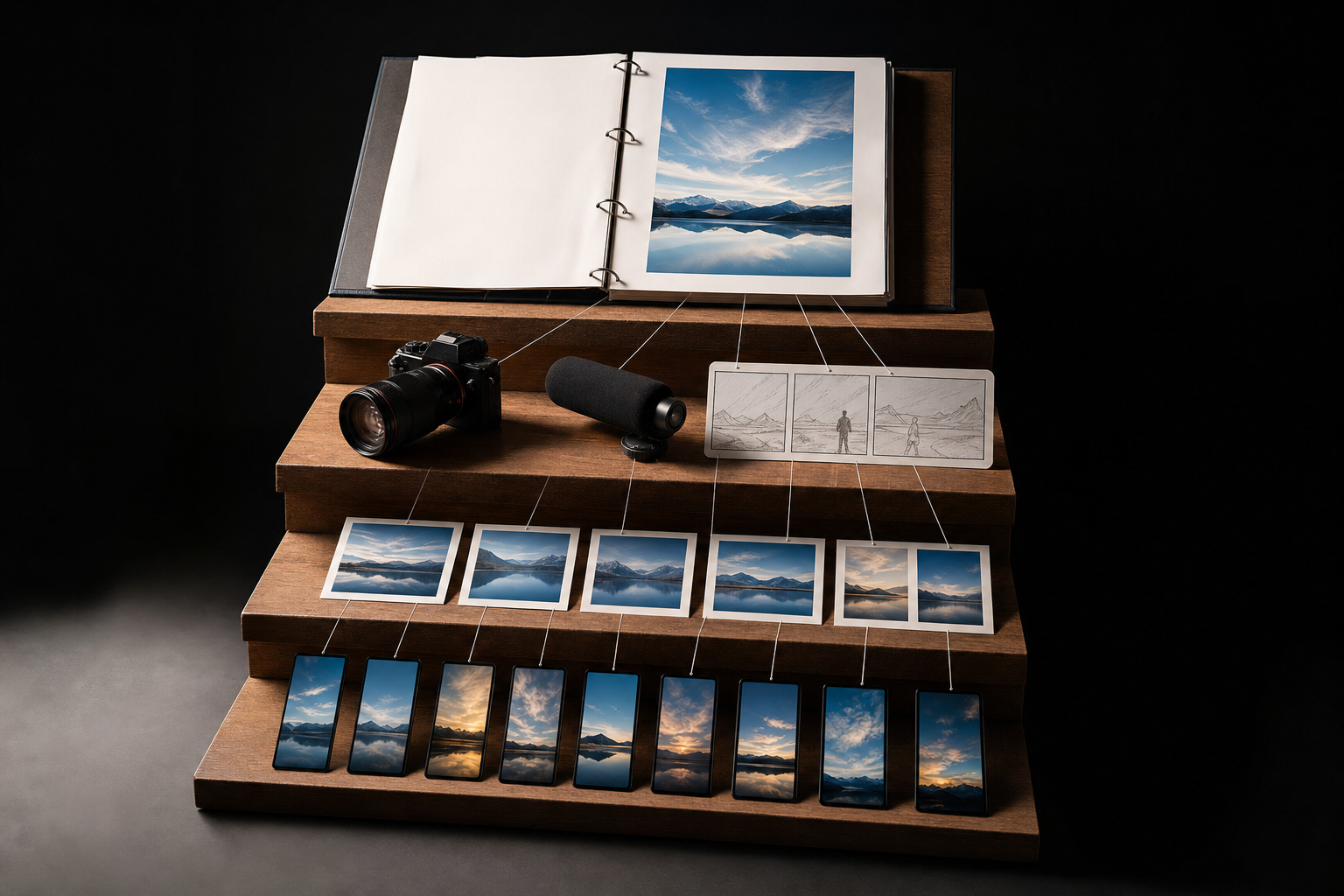
The fix: keep the idea, change the execution. Re-crop for Instagram's aspect ratio, swap the opening frame, and rewrite the caption in Instagram's tone rather than pasting your TikTok text. A smarter cross-posting workflow lets you adapt per platform instead of blasting one clone across all of them.
Mistake 4: Ignoring the hook because you 'already posted it elsewhere'
When you repost, it's tempting to reuse the original opening line word-for-word. But the first second is doing double duty now: it has to stop the scroll AND look freshly made for this audience. A tired, obviously-recycled hook underperforms and reinforces the 'this isn't native' signal.
Why it hurts: weak retention in the first seconds tells Instagram nobody's engaging, which compounds any reshare penalty already working against you.
The fix: write a platform-specific hook and pressure-test it before you post. Run your opening line through the free Scroll-Stopper Score to see whether it earns the stop, then rebuild the first frame so it feels made-for-Instagram rather than borrowed.
Mistake 5: Letting AI captions sound generic and off-brand
As more small brands lean on AI to speed up posting, feeds are filling with interchangeable, samey captions. That's a problem beyond aesthetics: uniform, low-effort text pattern-matches to bulk-distributed content, which is exactly the kind of thing native-first ranking is trying to filter out.
Why it hurts: a caption that could've been written for any brand doesn't build the account signals — saves, comments, profile taps — that keep your reach healthy.
The fix: train your AI on how you actually talk. When you set up your voice with Make AI Sound Like You, your captions read like a person and a brand, not a template — which keeps your content distinctly yours and native to your account.
Mistake 6: Skipping carousels because Reels feel safer
Many founders over-index on Reels and let their grid go stale. But native carousels are a strong, low-cost way to feed the algorithm original content it can't find anywhere else — they're inherently made for Instagram and rarely get flagged as recycled.
Why it hurts: leaning only on repurposed video means fewer native-only formats in your mix, so you're more exposed to reshare downranking with nothing balancing it out.
The fix: build original carousels around your best ideas. An AI carousel generator turns a single insight into a native, swipe-worthy post in minutes — genuinely original content that reads as made-for-Instagram from slide one.
Key takeaways
- Instagram's 2026 reshare downranking favors accounts that create content over accounts that redistribute it.
- Watermarks from other apps are the clearest 'this isn't native' signal — always export clean.
- Don't cross-post identical files: keep the idea, re-crop and rewrite per platform.
- Native-only formats like carousels are underused insurance against the original content penalty.
- Platform-specific hooks and on-brand captions boost retention and reinforce that your content is original.
- Native-first is a workflow habit, not a bigger production budget.
Plan the idea once, then produce a clean, native version for every platform — no watermarks, no duplicate files, no reach penalty. VibeDay helps solo founders and small brands do exactly that.
Start creating native-first →Put your content engine on autopilot
VibeDay turns one idea into scroll-stopping posts — image, video, and carousel — captioned for every platform.
Start your free 7-day trial →